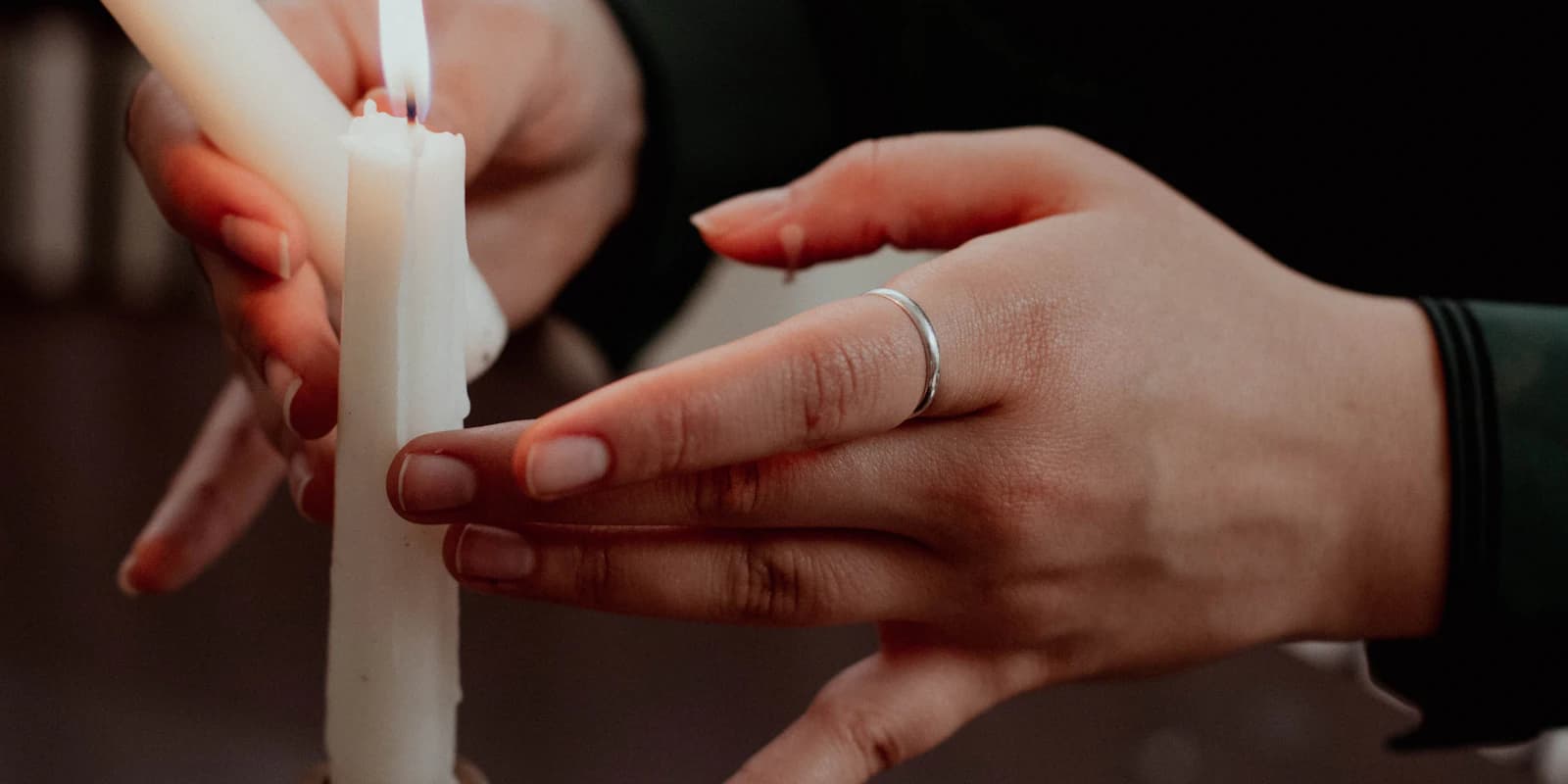
Date internationally for long enough and you will probably meet someone who grew up with a different faith, or with none at all. Plenty of couples like this are happy for decades. What they tend to have in common is not that religion stopped mattering, but that they talked about it honestly and early, and kept talking as life changed.
This guide does not take sides on any faith. It covers the practical questions that come up when two people see religion differently, whether that is two religions, two levels of practice within the same religion, or one believer and one person who is not religious.
Find out what it means to them, not just the label
Two people who give the same answer on a profile can live very different lives. One person who calls themselves Catholic goes to Mass every week. Another mostly goes at Christmas with their grandmother. The label tells you less than the details. Ask what their faith looks like on an ordinary Tuesday, what they would never give up, and what they are relaxed about.
Be ready to answer the same questions yourself. If you are not religious, it helps to explain what that means for you. "I was raised without religion and I am curious about yours" lands very differently from "I think it is all nonsense", even if you would not say the second one out loud.
When to bring it up
Earlier than you might think. You do not need to discuss theology on a first date, but if faith shapes your plans for marriage, children or where you live, say so within the first few conversations. It is kinder to find out in week two than in year two that one of you needs a partner who shares their faith.
The everyday questions
Most of daily life together is not about belief. It is about habits, and these are the ones couples most often need to work out:
- Food and drink. Fasting, foods that are not eaten, and whether alcohol is fine at home or at family events.
- Time. Prayer times, a weekly day of rest, and religious services that take up a morning or an evening.
- Holidays. Which ones you celebrate, with whose family, and how.
- Home. Religious objects, how the home is kept, and who is welcome to visit.
- Community. How much of your partner's social life happens around a place of worship, and whether you are expected to join in.
None of these need to be settled all at once. What helps is knowing which ones are flexible for each of you and which are not.
Family expectations
Sometimes the couple is fine and the families are not. A parent may worry that their traditions will end with them, or that their child will drift from the community. That worry usually comes from love, even when it is hard to hear.
Talk with your partner about how their family is likely to react, and agree on how you will handle it together. Showing genuine interest in their traditions, joining in where you are comfortable and being honest about where you are not usually earns more respect than pretending. It can take time. Many families who were cautious at the start become the couple's biggest supporters.
Children
If you want children, this is the most important conversation to have before you commit. Will they be raised in one faith, in both, or in neither, free to choose for themselves later? Will they be baptized, have a naming ceremony, attend religious school, keep certain holidays? There is no single right answer, and many couples raise children with both traditions. The difficulty comes when each person quietly assumes the answer is obvious.
Conversion
Some people convert for a partner, and for some it becomes a meaningful part of their life. But conversion should be a personal choice, not a condition you agree to in order to keep the relationship. If you feel pressure to change your beliefs, or if you notice yourself hoping your partner will change theirs, that is worth talking about openly. A relationship built on the hope that someone will become a different person is fragile.
Weddings
Weddings bring everything to the surface at once: two families, two sets of traditions, and sometimes legal rules about which ceremonies are recognised. Some couples have two ceremonies. Others have one that includes elements from both sides, or a civil ceremony with a religious blessing afterwards. If you plan to marry abroad, check early what the local requirements are, because some countries only recognise certain kinds of marriage.
When it really does not work
For some people, sharing a faith with their partner is not negotiable, and that is a legitimate choice. If one of you needs a partner of the same religion, no amount of compromise on holidays will fix that. Being honest about it, with yourself first, saves both of you a lot of pain. It is not a failure to recognise that you want different lives.
What helps
- Curiosity. Ask questions because you want to understand, not to win an argument.
- Respect without pretending. You do not have to share a belief to treat it with care.
- Talking again later. What felt simple at 28 may feel different when you have children or lose a parent.
- A shared core. Couples who differ on religion often find they agree on the values underneath: kindness, family, honesty, generosity.
Faith is one part of who someone is, alongside their culture, language and family. If you are also bridging those, our guide to dating across cultures covers the everyday side of it.